Sunday, September 18, 2016

World Chess Hall of Fame

4652 Maryland Avenue
St. Louis, MO 63108
Admission is free. On-street parking with meters or city lot. 

http://www.worldchesshof.org/   


The Chess Hall of Fame called three cities - New Windsor (NY), Washington, DC, and Miami - its home before moving to St. Louis after closing in Miami in 2009.  It opened here in September 2011 and includes both the U.S. and World Halls of Fame. Located in the Central West End of the city of St. Louis, the building houses three floors of exhibits as well as a fun gift shop. 

Across the street is the Chess Club and Scholastic Center of Saint Louis.  Between the two buildings there is a very active calendar of events.The activities of the two organizations led the U.S. Senate to declare in 2014 Saint Louis the Chess Capital of the United States.

You can't miss finding the Hall of Fame building - situated in the front yard is the world's largest chess piece.  It is 14 feet 7 inches tall. 


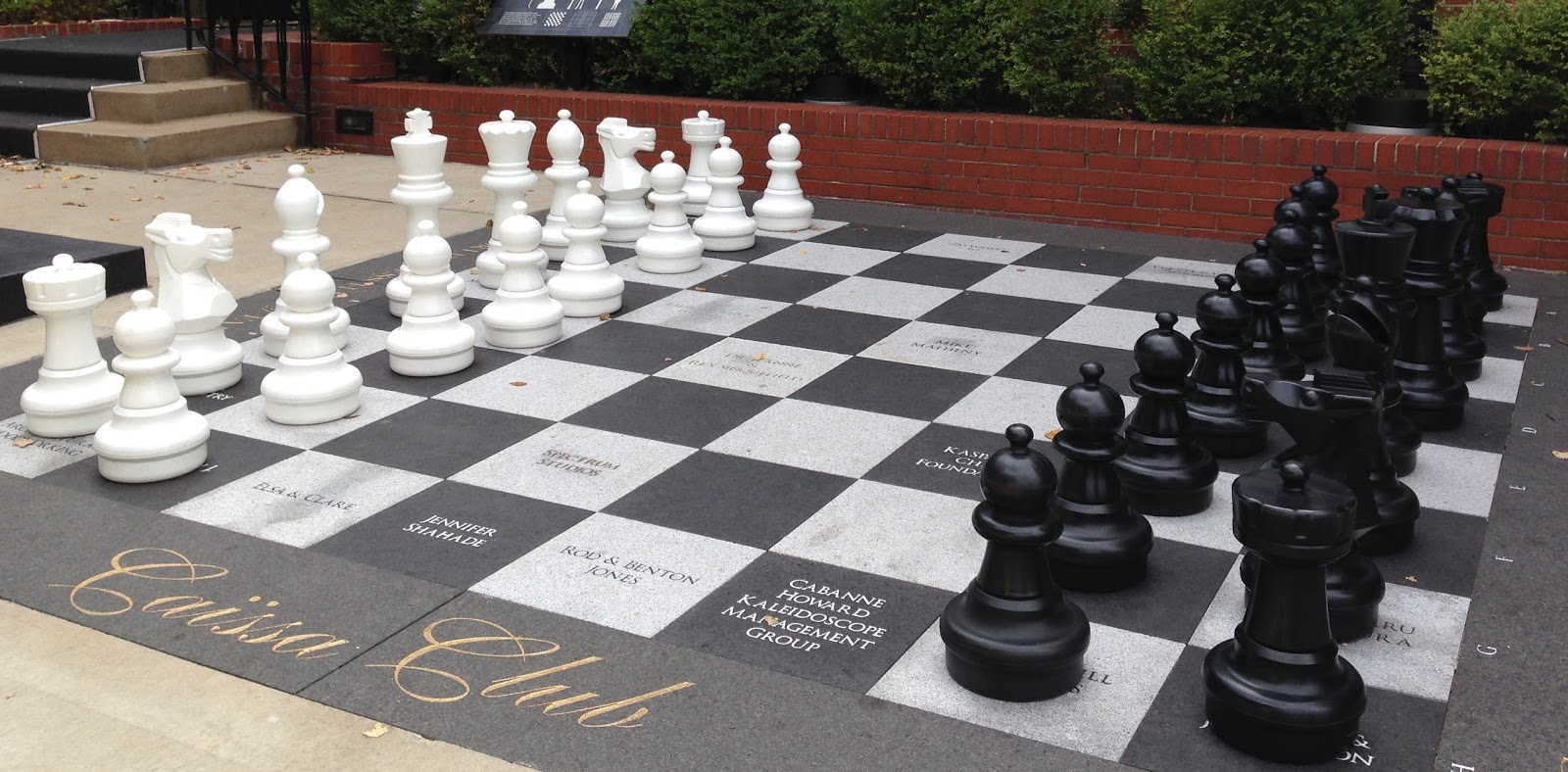
In addition one can stop on the way into the building for a game of sidewalk chess using these very large pieces on display. 
The building's three floors have changing exhibits.  The day of our visit the first floor exhibit was Tom Hackney: Corresponding Squares: Painting the Chess Games of Marcel Duchamp. Hackney, a contemporary British painter, created geometric abstractions based on the movements in chess games played by Duchamp (1887-1968), French artist and chess player. The two paintings below represent games played in 1928 and 1929. 


The technological part of the exhibit was computer screens that explained the process of determining what color to paint where based on the moves. 

It is known that Duchamp had at least one set of chess pieces that were in color. It is a lost set but was reconstructed in 2016 and a picture is on display. 

Not surprising there were a number of paintings which represented the color pieces. The additional difference with these paintings was that unlike the black, white, and brown paintings that started with the first move and went to the last, with the colored paintings the contest begins with the last move and ends with the first.                                


The second floor exhibit was interactive and for the family.  It had a $5 admission fee, though we were able to visit it for free since we are not children! The exhibit was developed in partnership with The Magic House. 

From when you enter you know it is a fun place to be. 

Here are more opportunities to play chess with large pieces. One can also build a castle. 

And there is an opportunity to make crowns.

There are additional stations with activities. 

Children - and adults - can pretend they are chess pieces. 

They can also dress as kings and sit on their thrones! 

The day of our visit the third floor was being prepared for a new exhibit.  A peak through the door's window gave us a slight view of the World Hall of Fame. 

New Hall of Fame inductees are pictured in the hallway. 

Other exhibits are seen in the hallways including pictures of famous matches. 


Perhaps our favorite part of the museum is the Q Boutique. 

Here there are many items for sale with the chess games being the highlight. Ah, what they create with wood!


The most fascinating pieces are in this collection of different themed sets.

Cats and dogs!

Alice in Wonderland!

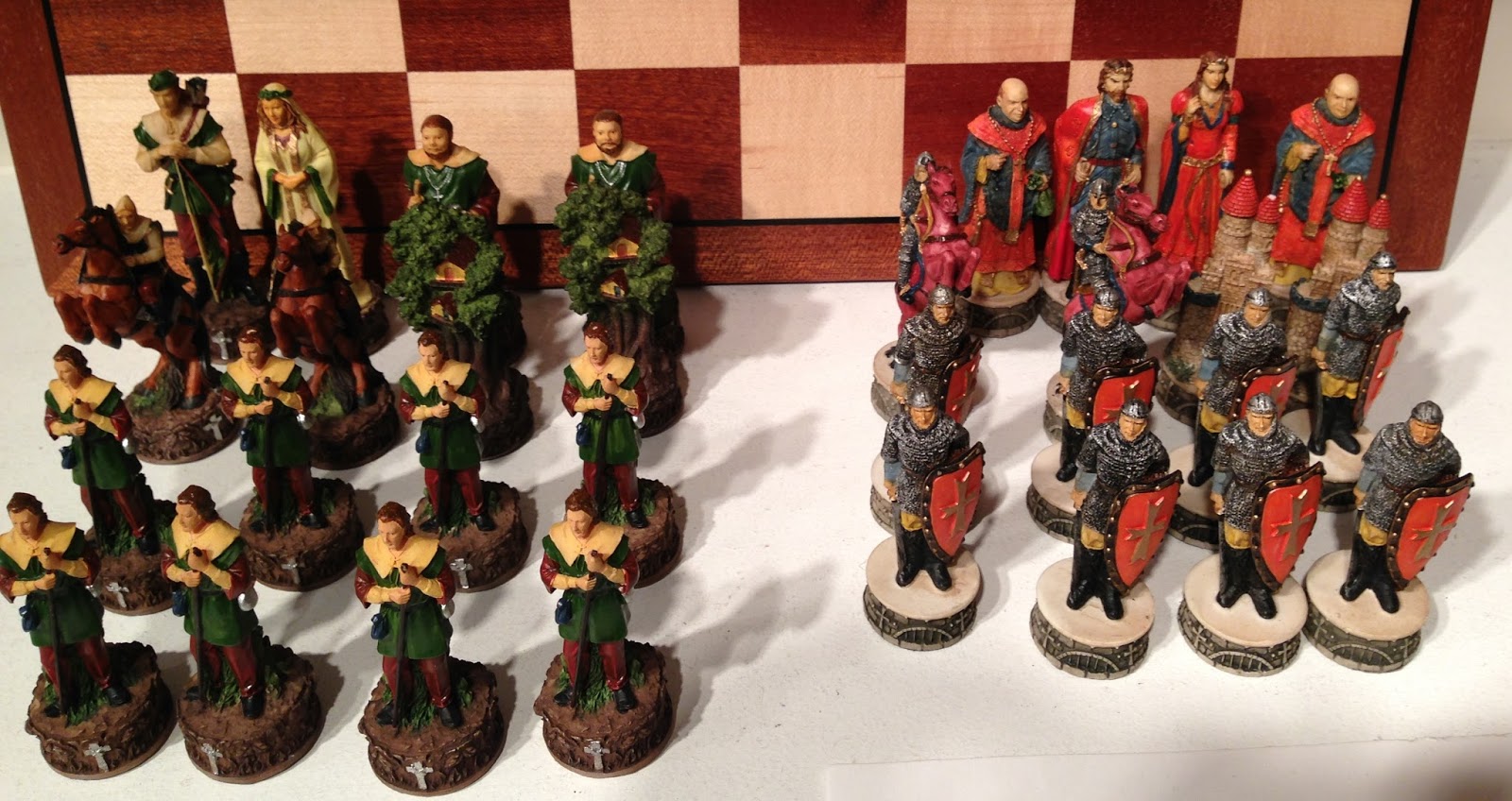
Robin Hood!
Sets are made from many mediums. This is an LED chess set.

These two sets are made from paper.


And my favorite is made of chocolate!

Lunch was at the delightful Mary Ann's Tea Room, about two blocks from the museum. 

To get to the team room one walks through Enchanting Embellishments, a design and fashion boutique. 

The tea room was built as a greenhouse in 1921.  What is now the boutique was the floral shop. The tea room is an elegant and fun environment for lunch. 

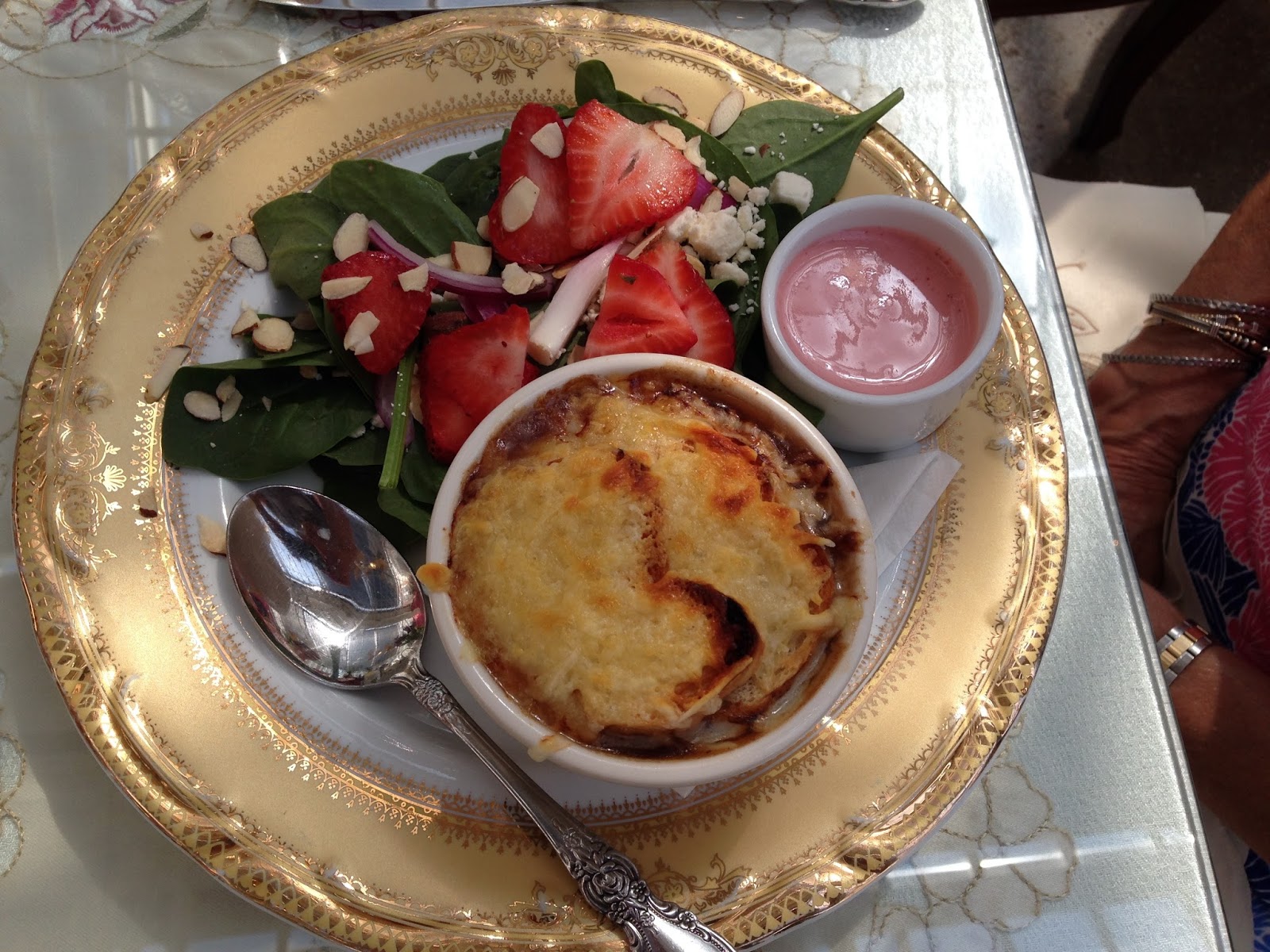
The food is wonderful.  Three of us had combination meals, enjoying their various salads plus chicken salad croissant, onion soup, or quiche. 


The Honey Smoked Salmon Salad was wonderful, too. 

Comments
The chess Hall of Fame is certainly a unique museum.  It is also a small museum and because one floor was changing exhibits (and thus closed) and one floor was a children's exhibit, that left really only the art exhibit for us to see. None in my group are chess players so it was not easy for us to relate to this exhibit. We did love seeing the interactive family display, though, and acting like children. We spent less than a hour at the museum. 

My suggestion would be to research on their website what are the current exhibits before going to the museum. All three floors of exhibits change periodically.  There are some exhibits scheduled to open soon that we would have enjoyed seeing more than the current one.  

We went on a week-day afternoon and were at times the only visitors at the museum. Several staff members were present and they were friendly, knowledgeable, and informative. They were very nice about letting us visit the family area for free. 

We loved the gift shop and purchased jewelry, t-shirts, pens, and other items. The chess games on sale were so fun to look at. We spent a lot of time in the boutique.  

Mary Ann's Tea Room was wonderful and we all would like to return to have lunch there again. The staff was very friendly and the food was yummy.  We ordered a dessert that was divine - Decadent Chocolate Mousse Torte. It looked so good that we dove into it before taking a picture. http://www.maryannstearoom.com/  

We enjoyed walking through the boutique at Mary Ann's and seeing all they offered for sale.

Monday, August 1, 2016

St. Louis Mercantile Library and Art Museum

1 University Blvd.
St. Louis, MO 63121
Free admission. Parking is $1

http://www.umsl.edu/mercantile/    


The St. Louis Mercantile Library was established in 1846 and is the oldest surviving library west of the Mississippi. It was originally a subscription library and it was located in downtown St. Louis until 1988 when it moved to the campus of the University of Missouri-St. Louis. Although memberships are still available the library is now partially supported by the university.

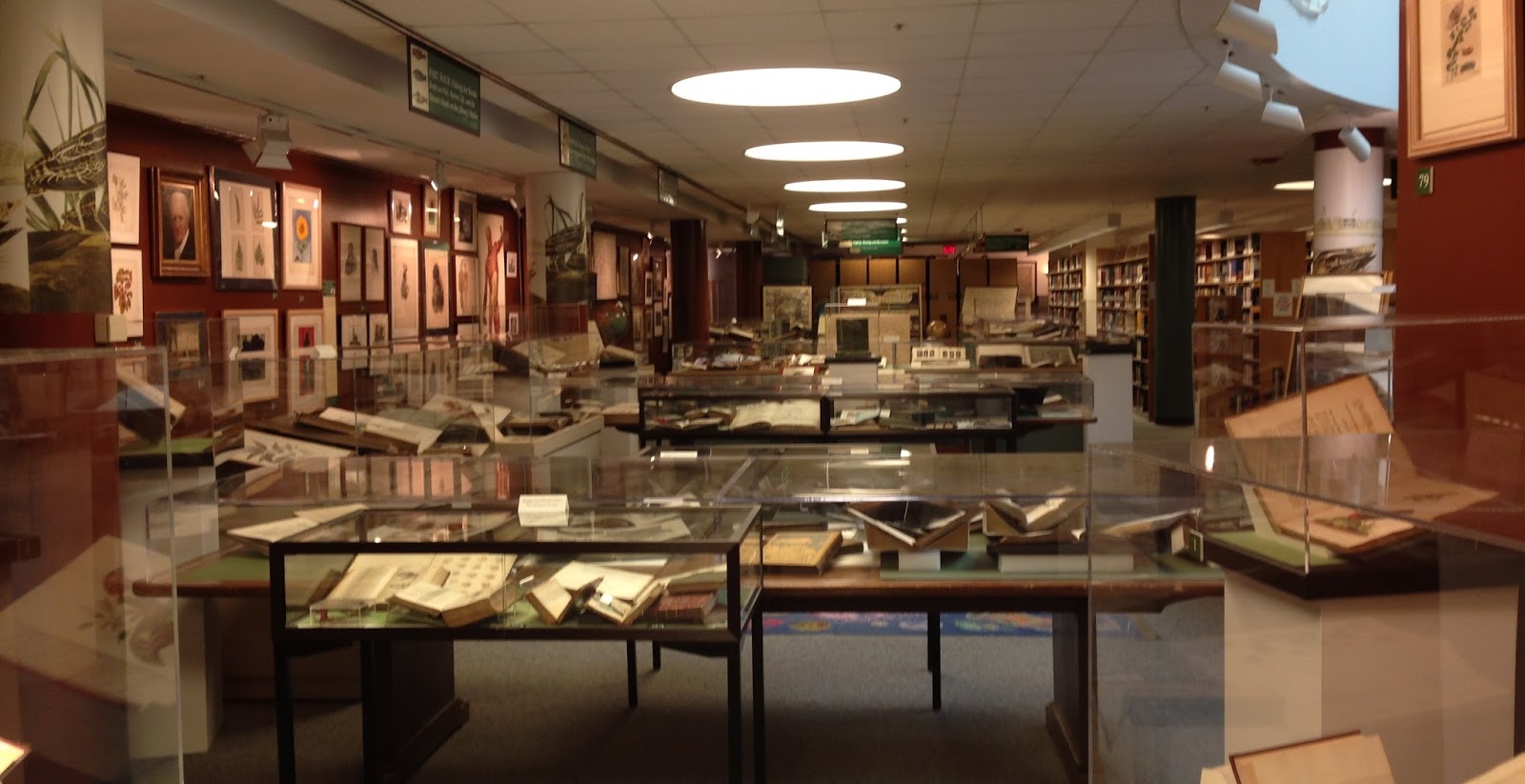
When one enters the library it is immediately obvious that this is not a typical library.

From its founding the library considered art essential to its mission and over the years they have established a significant collection of paintings, sculptures, prints, etc. According to their Art Museum brochure: "these works relate to and complement the Library's archival and manuscript holdings by providing visual documentation of the physical and cultural development of our city, state, and nation."

Paintings, prints, and drawings literally cover the walls of the library.


True to their mission much of the artwork highlights our area such as this oil painting of Lafayette Square and the print of Union Station.


There are also a number of framed maps such as these fun detailed maps of the every-changing flow of the Mississippi River.


The library is literally full of statues of all shapes and sizes, such as these below. 
 Sacajawea, or Birdwoman's Dream, 2000, bronze, by R. H. Dick

 Lincoln from Life, 1860, painted plaster, by Leonard W. Volk

 Rip Van Winkle Returned, 1871, painted plaster, by John Rogers


 Beatrice Cenci, 1857, marble, by Harriet Hosmer

This carved oak pedestal depicts scenes from the life and works of Robert Burns and holds a marble bust of Burns.  It was donated to the library in 1857.


 Among other wooden objects are several beautiful pieces of furniture including this antique cabinet. Now it holds works of art displayed on top.  

A number of the art works and artifacts are part of special collections or libraries within the Mercantile Library. The John W. Barriger III National Railroad Library is one of the largest and finest railroad collections in the USA. Among the shelves of railroad books are many railroad-related displays. 


This bronze statue of Jesse James sits in this collection because of the many trains he robbed.

 At the ends of the stacks are framed song sheets of different railroad folk songs.

Naturally a St. Louis library would have an area highlighting waterways!

Large boat models are among other artifacts.


 This square grand piano, built about 1875, is believed to have been on the steamboat Belle of St. Louis.

Another section is a political gallery. 

Several display cases are filled with artifacts.

These painted plaster statues by John Rogers are called Politics, 1888, and Challenging the Union Vote, 1869.

These political buttons are among those in the exhibition entitled Presidents and War.

Anyone remember this button? 

When you enter the museum you walk through a small African American Collection which includes 29 items. 


Among the items is a framed engrossed early printing of the Emancipation Proclamation signed by Abraham Lincoln. 

Another area of the library has a collection of 17 items that now belong to the Mercantile Library but came from the 1850's St. Louis Museum.


Among the items in this area is this Ghost Dance Peace Pipe from 1885.

An unnamed beauty.

There is also a small section in the library on the St. Louis World's Fair including this model of the Chinese Pavilion in its entirety. 

It is obvious that much of the library includes displays of donations such as this G. Duncan Bauman Memorial provided by his family.


A draw to the library is their changing exhibitions. 

This political print gallery is on the lower level in the center of the library. 

Currently the gallery includes 28 "faces" of George Washington. 


Another temporary exhibit highlights three artists of early America's natural world. 

This display includes 21 framed plates from a book of the the 18th century flora, as produced by Francois Andre Michaux. 

Several display cases show off the Native American photographs of early 20th century photographer and ethnologist, Edward Sheriff Curtis. 

The largest temporary exhibit is entitled Audubon and Beyond

It covers a large area of the lower library. 

The walls are filled with prints and other framed items. 

As are all items on display these Audubon items are marked with numbers which are then explained in a free booklet. 

These drawings were first done in the late sixteenth century by English artist and colonist John White. 

The fourteenth and last section of the exhibition highlights pets - dogs and cats. 

There are many pamphlets and fact sheets available as you walk through the library and museum areas. 

After our visit to the museum, we had lunch two miles away at the Ferguson Brewery Company which needless to say offered many different brews!


The brewery is known for their excellent smoked meats so we tried their brisket tacos and their pulled pork sliders.  Yummy!


Comments:  In many ways this library is a hidden gem among St. Louis museums.  One has to read the fine print to learn that there is a museum inside the Mercantile Library. And actually the whole library is truly a museum.

We thoroughly enjoyed wandering around for about two hours and looking at the different items of art, the opened books, and the few artifacts. We all agreed that we would like to go again but next time we would take one of the docent-led free tours offered on the week-ends. It is a little difficult to understand the layout of the two-level library and a number of the items do not include explanations.  The tours are highly recommended so hopefully they would help answer some of our questions. If you are a group you can also arrange for a free group tour during the week. 

On a Monday morning we were the only ones wandering about the library with the exception of staff.  We have been told that the library is much busier during the academic year as many students do research in this library.  The webpage recommends that you call the library first to confirm that there will be no tours in session at the time you want to come. 

I was also once warned that parking was tricky but in reality it was not. There are good instructions on the webpage for driving on campus to the police station to get your daily parking pass and then to drive to the garage by the library.  We were able to park in one of the reserved Mercantile spots on the third floor which is ground level to the library entrance. The Mercantile library is in the university library building.

We found the staff in both libraries very friendly and helpful.  John Neal Hoover, the Executive Director of the Mercantile, stopped his work on a display and spent quite a few minutes with us sharing the library history and answering questions. 

The webpage is helpful in preparing for a visit. 

The brewery is highly rated. We found their meat dishes to be excellent but we were not too impressed with our sides. We did not try the brew!