St. Louis, MO 63101
Admission is $15 for adults, $12 for seniors, $10 for students - also group rates. No free parking.
Website: https://www.nationalbluesmuseum.org/

The National Blues Museum opened for the first time on April 2, 2016. In March, a few weeks prior to the opening, we were privileged to be led on a private tour by the Founding Executive Director, Dion Brown. Fortunately almost everything in the 23,000 square foot space had been completed by then. The museum is in the former Dillards building located right by St. Louis's downtown convention center. Hunt for the huge harmonica!

For five years a group of volunteers worked to see this museum become a reality. The amount of 13 million dollars was raised to finance the museum and professionals were hired to create the beautiful spaces. Many of the exhibits are colorful and three-dimensional. Here blues and the Great Migration is beautifully illustrated with suitcases, trunks, and signs.

There is, of course, a display on women and the blues and as well as many other colorful displays.


The museum tells the history of blues music starting with the roots of the blues and including its early history.


Even the galleries have fixtures to match the different historical eras of blues music including this period light fixture.

In case you forgot the displays will remind you that this is a museum not just about St. Louis blues but the NATIONAL museum acknowledging other cities that were part of the growth of this music.


And of course, St. Louis's role in the history of the blues is not forgotten through this and many other displays.

A costume and a guitar belonging to famous singer Chuck Berry graces one display case reminding visitors of St. Louis's local talent.

No museum is complete without a number of artifacts.
Blues has its origin in African American music so the early history section includes these African string instruments.

Maybe the most impressive artifacts on display are the 900+ harmonicas played and donated by St. Louis native Jim McClaren.


In this display case of the British Invasion the instruments help remind us of the role of blues in many areas of popular music.

Of course, we retired teachers are familiar with all these forms of recording music.

Among our favorite items on display were the beaters - or mixers - cleverly shown above the different forms of recording methods.

We also all smiled when we saw the transistor radio we all owned as young people.

Of course the museum is very high-tech. One of the museum highlights is the ability to visit digital kiosks in multiple museum rooms to write your own blues song.


Then you can go listen to all of the instruments performed together and email it to yourself as an mp3.

One of my favorite rooms was the jug band room where one picks a jug band instrument part to learn and then actually performs on the instrument with the band. A camera aimed at you projects your performance on the screen.

This is one of the areas where you can watch a video.

A music museum must have a performance venue. This small performance space within the museum has the capacity for 180 in the audience and is all high tech with live-stream possibilities. The plan is to have intimate blues concerts on Thursday, Friday, and Saturday evenings as well as at other times.

If you don't have the skills to actually perform on this big stage, there is a smaller stage within the museum where you can imagine yourself performing with an old-time blues band!

Like all great museums the walls include great quotes!


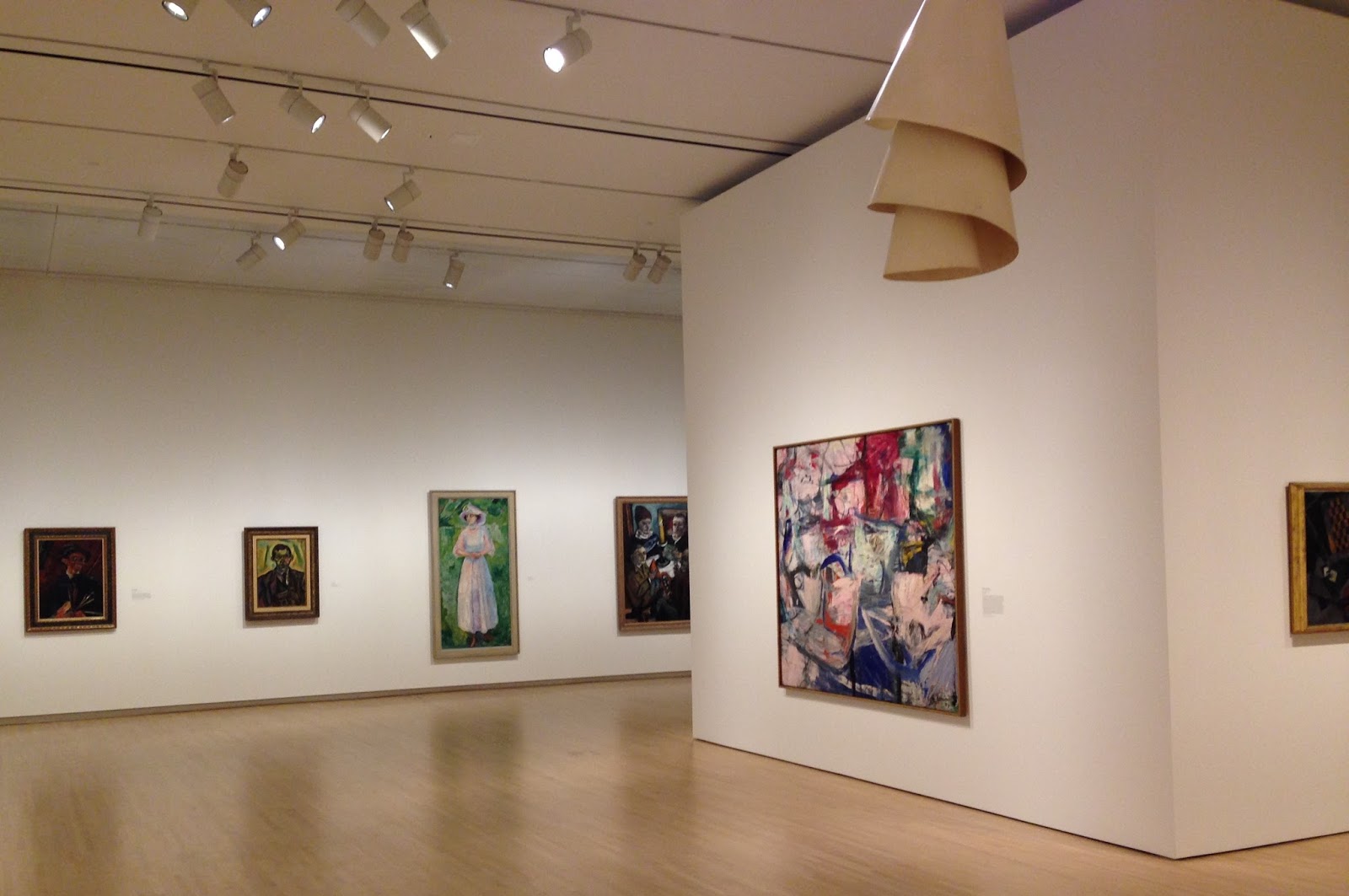
The museum includes two areas for temporary - or traveling - displays. The day we were at the museum, artist H.C. Porter was in the larger gallery completing the displaying of her interactive portrait series highlighting 31 blues artists from Mississippi. This exhibit will be on display through June 1, 2016.


This gallery is a large room and although when we were there it was still inhabited by pre-opening items, one still got the sense of the open space of this room which will be available for rent for receptions, etc.

The only other area that was not completed when we were there was the gift shop.

A statue to be placed outside still graced the lobby.

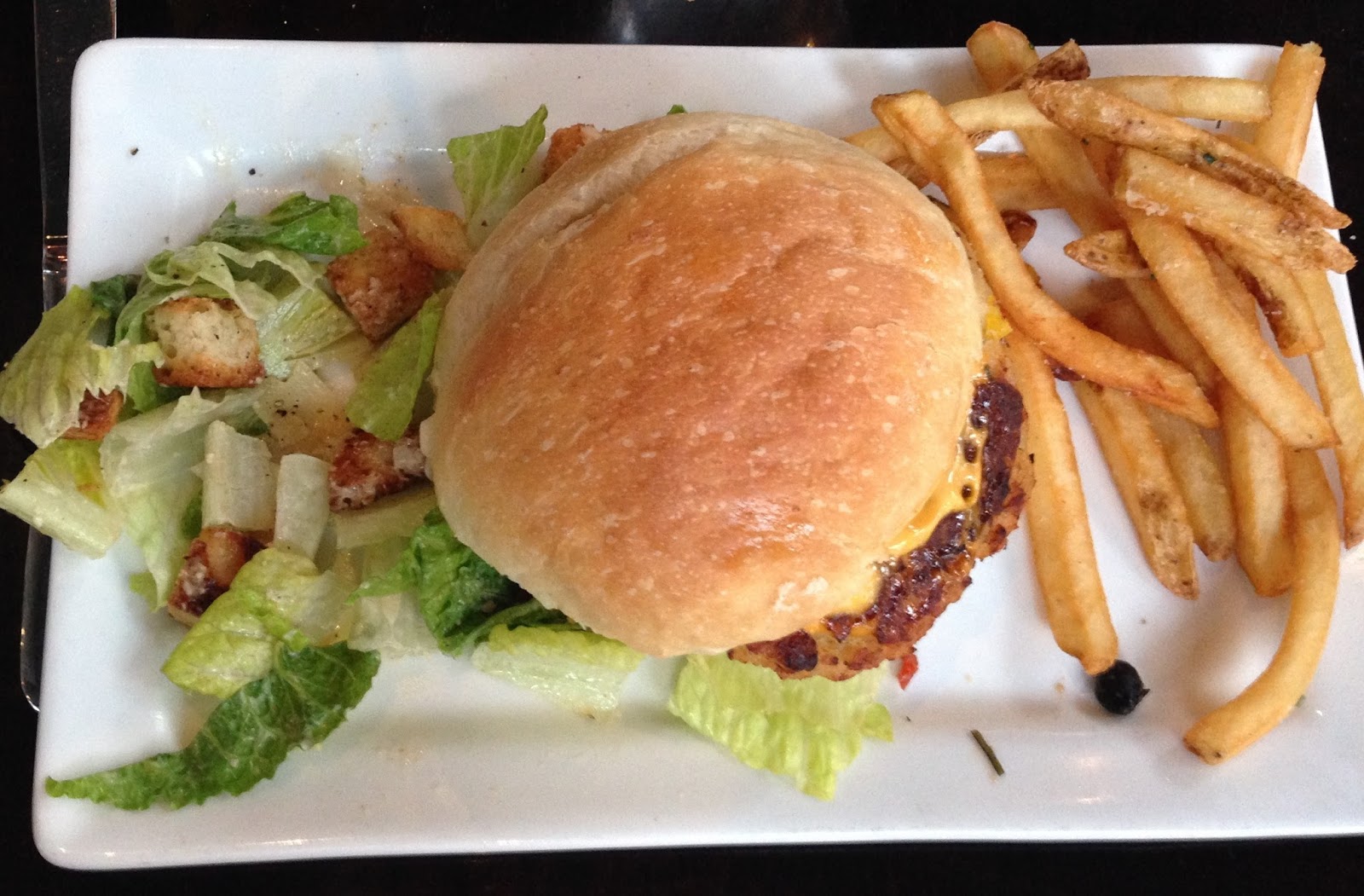
The museum is in between two restaurants - Sugarfire Smokehouse BBQ which opened two weeks before the museum and Robust which is where we had our lunch.

The restaurant is known for its large selection of wines and excellent food.

Comments: This museum opened with a big bang April 2! We were very privileged and thankful to have seen it before the opening.
Needless to say the museum is a great addition to St. Louis. It has already received a tremendous amount of favorable press in not only local publications and on local shows but also nationally in the press and on screen. The conclusion is that it will be a a huge draw for the city of St. Louis.
We really enjoyed the museum and were impressed with the whole layout. Dion Brown gave us an hour tour of the entire museum but we did not spend much time with the high tech displays. One could easily spend a few hours more there. Everything was put together by a highly-professional and experienced company and it shows in the excellent displays. Also there is a great deal of enthusiasm and support from local musicians which will certainly help to keep the museum a huge success. We found the staff to be very friendly and enthusiastic.
One does not have to be a lover of blues music to enjoy a visit to this museum. It is history, art, and music all professionally rolled together. And for those of us who live here, it gives us on more reason to be proud to be from St. Louis.
Also, if you have ever eaten Sugarfire BBQ you know it is worth the trip to the museum to enjoy some outstanding BBQ before or after.